DreamList
Guide
Gorilla Trekking in Uganda: Prices, Best Tours, and What to Expect
Gorilla Trekking in Uganda: A Once-in-a-Lifetime Wildlife Experience
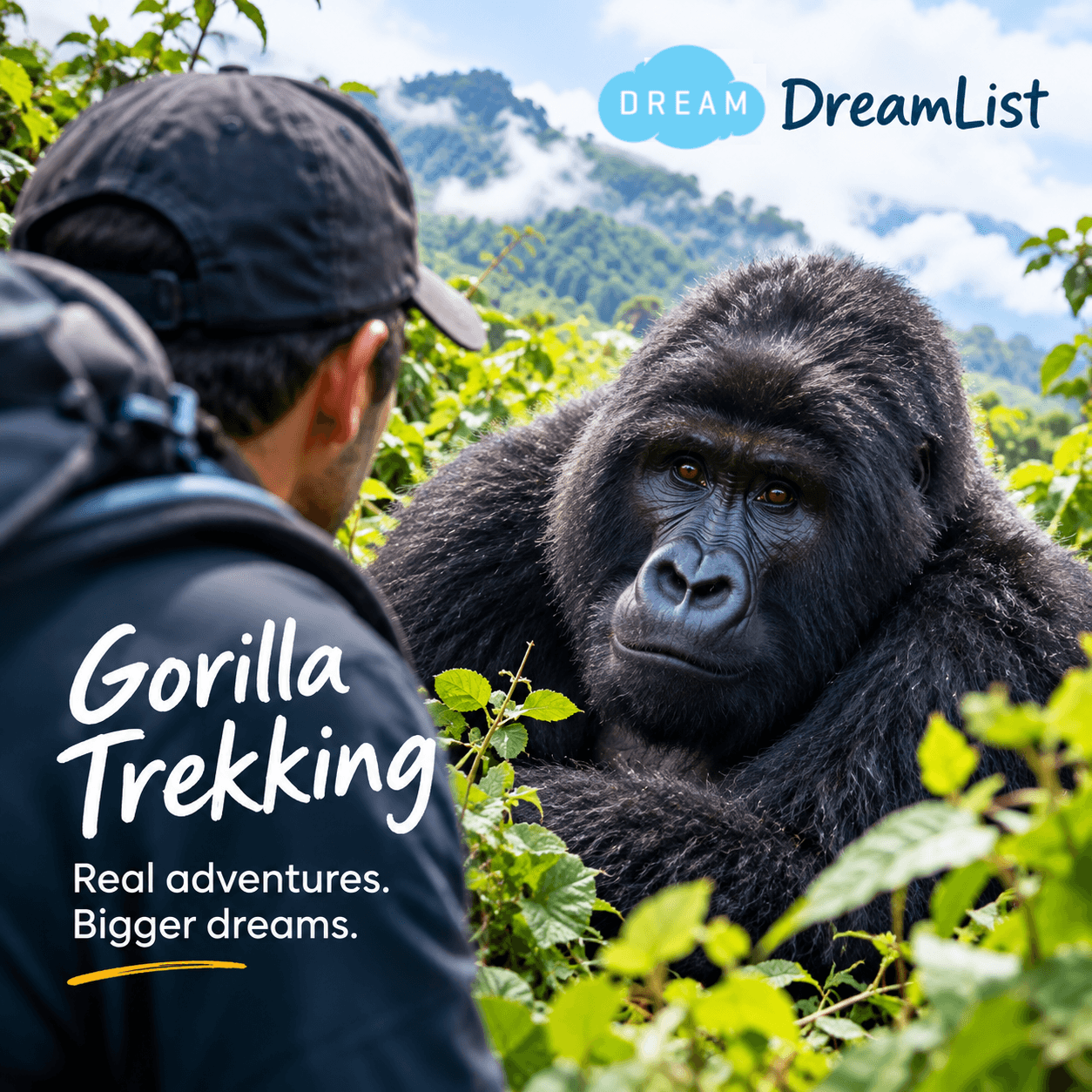
Imagine walking through a misty African rainforest, listening to birds and rustling leaves, when your ranger signals that a gorilla family is nearby. A few moments later, you see a huge silverback sitting peacefully among the vegetation while younger gorillas play around him.
This is mountain gorilla trekking in Uganda: an opportunity to observe one of the world’s most remarkable animals in its natural habitat.
Uganda is one of only three countries where you can track mountain gorillas in the wild. It offers two main destinations for this experience: Bwindi Impenetrable National Park and Mgahinga Gorilla National Park. Both provide opportunities to see habituated gorilla families with trained rangers and trackers.
Whether you are planning a luxury African safari or trying to experience gorilla trekking on a limited budget, understanding the permits, transportation, tour packages, and trekking process can help you make a better decision.
Where Do Mountain Gorillas Live?
Mountain gorillas (Gorilla beringei beringei) are a subspecies of eastern gorillas. Their natural habitat is limited to two isolated regions in Central Africa.
The first is the Virunga Massif, a volcanic mountain range whose protected forests extend across three countries:
- Uganda, particularly Mgahinga Gorilla National Park.
- Rwanda, particularly Volcanoes National Park.
- The Democratic Republic of the Congo (DRC), particularly Virunga National Park.
The second region is the Bwindi Impenetrable Forest in Uganda, with gorillas also found in the nearby Sarambwe Forest Reserve in the DRC. Therefore, not all mountain gorillas live in the Virunga mountains.
What Is a Silverback Gorilla?
A silverback is a mature male gorilla whose back develops a distinctive patch of silver-grey hair. He is often the dominant male and plays a central role in protecting and leading his family group.
A gorilla family may include the silverback, adult females, juveniles, and infants. The silverback is not necessarily the biological father of every young gorilla, but he often provides protection and leadership for the group.
Watching a silverback in the forest is one of the most memorable parts of gorilla trekking. His size and strength are impressive, but he may appear surprisingly calm when his family is accustomed to the presence of authorized human observers.
Remember, however, that a habituated gorilla remains a wild animal. Habituation does not make it a pet or eliminate the possibility of unpredictable behavior.
How Does Gorilla Trekking Work?
A common question is whether tourists walk through the forest searching for gorillas themselves. In practice, the process is much more organized.
1. Trackers locate the gorilla family first
Before tourist groups set out, experienced trackers and rangers enter the forest to locate the gorilla families assigned for monitoring. They use their knowledge of the animals, their movements, feeding areas, and previous locations to find them.
These teams communicate with the guides who lead the tourist groups. Once the location is established, the guides lead visitors through the forest toward the tracked family.
This means that tourists usually do not search the entire forest independently. However, the trek can still take several hours because gorillas move around, the forest is dense, and the terrain can be steep or muddy.
2. Your group follows a ranger
On the trekking day, visitors attend a briefing and are assigned to a gorilla family. Groups then enter the forest with authorized guides and rangers.
The walk can be relatively short or physically demanding, depending on where the gorillas are located. You may climb steep slopes, cross muddy paths, or move through thick vegetation.
When the trackers and guides locate the family, they direct the group to an appropriate viewing position.
3. You spend time observing the gorillas
Standard gorilla trekking generally allows approximately one hour with the gorilla family, subject to the applicable park rules and the animals’ welfare.
During that time, visitors can observe the family’s behavior, including feeding, resting, grooming, playing, and interactions between adults and young gorillas.
The experience is not a performance. Gorillas do not have to do anything for visitors, and their natural behavior is part of what makes the encounter special.
For a visual example of the experience, watch this gorilla-tracking video on YouTube (opens in a new tab).
How Are Wild Gorilla Families Habituated to Humans?
Gorilla habituation is the gradual process through which a wild gorilla family becomes accustomed to the presence of authorized human observers.
It is important for responsible tourism because gorillas naturally avoid people, and unhabituated families cannot simply be approached by tourists.
The process takes time and requires experienced conservation teams.
From avoiding humans to tolerating their presence
When a team begins working with a wild gorilla family, the animals may keep their distance or retreat when people approach. Rangers and researchers observe the group carefully and gradually increase the duration and proximity of their visits.
Over time, the gorillas may learn that these particular human observers do not present an immediate threat. The process can take years, depending on the family and the conditions.
Eventually, some families become sufficiently habituated for carefully controlled tourism visits.
Are all habituated gorilla families equally accustomed to people?
No. Gorillas can differ in how they respond to human presence, and habituation is not a simple division between animals that are completely wild and animals that are completely tame.
Some families may largely continue their normal activities when visitors are present. Others may be more alert, cautious, or responsive to people.
A group undergoing habituation is not necessarily available for ordinary tourist trekking. Uganda also offers a separate gorilla habituation experience in Bwindi, where visitors can spend a longer period with a family undergoing the process, subject to permit availability and park rules.
Do not assume that you can select a newly habituated family during a standard trek. Family assignments are controlled by park authorities, and access depends on the specific product and conservation arrangements.
Gorilla Trekking Safety: Follow Your Ranger’s Instructions
Mountain gorillas are powerful wild animals. Even when a family is accustomed to seeing authorized visitors, there is no physical barrier separating you from them.
Your ranger’s instructions are not optional suggestions. They are essential for your safety and the welfare of the gorillas.
Keep these principles in mind:
- Maintain the required distance. Uganda’s published guidelines have specified a 10-metre distance; follow the current instructions given by your ranger, particularly if the gorillas move closer.
- Avoid direct, prolonged eye contact. A fixed stare can be perceived as threatening in some circumstances. Follow your ranger’s guidance and avoid challenging or staring down a gorilla.
- Keep your voice low. Loud noises and sudden movements can disturb the family.
- Never approach an infant or separate a gorilla from its family. Give the animals space and never attempt to touch them.
- Stay with your group. Do not move independently toward a gorilla for a better photograph.
- Do not touch, feed, or attempt to attract the gorillas.
- Follow instructions immediately if a gorilla reacts to your presence. Do not improvise or approach it.
- Do not trek when ill with a potentially infectious respiratory disease. Gorillas are susceptible to human illnesses.
How Much Does Gorilla Trekking in Uganda Cost?
The total price depends on the permit, transportation, accommodation, the number of days, and whether you choose a private or shared tour.
For international visitors, the standard Uganda gorilla trekking permit was increased to US$800 per person from July 2024. More recent 2026 travel information also reports a US$600 low-season rate for April, May, and November. Because tariff periods and eligibility can change, confirm the price and availability directly with the Uganda Wildlife Authority before paying.
The permit is only one part of the expense. Transport from the airport or city, overnight accommodation, meals, and other activities can add considerably to the total.
Cheapest and most expensive tour options
The SafariBookings Mgahinga Gorilla Trekking Tours page (opens in a new tab) lists packages from different tour operators, allowing visitors to compare itineraries, accommodation levels, and transportation arrangements.
Prices change and depend on travel dates, party size, and what is included. The following are examples from the listings available during research, not guaranteed quotes.
| Tour option | Published price example | What to consider |
|---|---|---|
| Three-day shared Mgahinga trek from Kigali | $1,600 per person | A shared option that may reduce transport costs. |
| Three-day gorilla and golden-monkey tour from Kigali | $1,750 per person | Combines two primate experiences. |
| Four-day Mgahinga gorilla and golden-monkey tour | $1,900 per person | Includes more time and additional activities. |
| Longer, multi-park Uganda safari | Several thousand US dollars per person | May include gorillas, chimpanzees, wildlife drives, accommodation, and more extensive transport. |
Prices above reflect examples shown on the SafariBookings listing and may change. The site can display prices in different currencies. Check the individual itinerary to see exactly what is included before comparing packages.
A longer luxury safari is not necessarily a better gorilla encounter. The actual gorilla trek is a park-controlled experience; the extra cost often pays for accommodation, private transport, additional destinations, and comfort.
For a budget-conscious traveler, compare the total cost of a short trip, not just the advertised tour price.
Can You Arrange Gorilla Trekking Independently?
Yes. You can organize parts of the trip yourself rather than buying a complete safari package. However, independent travel does not mean entering the forest without authorization or tracking gorillas without a ranger.
A self-arranged trip typically involves booking your own transportation and accommodation while obtaining a valid gorilla trekking permit through the authorized process.
For example, you could travel to southwestern Uganda, stay near Kisoro or Mgahinga Gorilla National Park, and join the official trek on the morning of your permit date.
What does an independent trip involve?
- Secure the permit first. Gorilla permits are limited, so confirm availability before committing to non-refundable flights or accommodation. Use the Uganda Wildlife Authority’s official channels or a reputable authorized operator.
- Arrange transportation. You can investigate public transport, a private driver, or a rental vehicle for the journey to southwestern Uganda. The last part of the journey may involve rural roads, so check local conditions and whether your vehicle is suitable.
- Book accommodation near the park. Staying close to the trailhead can reduce the stress of an early start.
- Arrive for the official briefing. Your permit grants access to the authorized tracking experience, not permission to explore the forest independently.
- Follow the ranger-led trek. Park authorities assign the family and guide the group.
Is independent travel cheaper than a SafariBookings tour?
It can be, particularly if you already live nearby, can use affordable transportation, or are travelling with someone with whom you can share costs.
However, independent travel is not automatically cheaper. A solo traveler paying for private transport, accommodation, meals, and the permit may spend as much as—or more than—a shared package.
The correct comparison is:
Independent trip total = permit + transport + accommodation + meals + local transfers + other fees.
Tour package total = advertised tour price + any exclusions + personal expenses.
Ask operators for an itemized quotation and compare it with realistic independent-travel costs. A very low advertised price may exclude the permit or important transport arrangements, so always check the details.
Uganda vs. Rwanda vs. the Democratic Republic of the Congo
All three countries offer access to mountain gorilla habitat, but they differ in price, accessibility, accommodation, and current travel conditions.
Gorilla trekking in Uganda
Uganda’s main advantages are the choice between Bwindi and Mgahinga, the opportunity to combine gorilla trekking with other wildlife experiences, and the possibility of organizing a budget-conscious itinerary.
Mgahinga is part of the Virunga mountain region, while Bwindi protects a separate mountain gorilla population. Uganda therefore offers more than one setting for the experience.
Advantages
- Two national parks with mountain gorillas.
- Opportunities to combine trekking with golden monkeys, chimpanzees, and other safari activities.
- A range of accommodation and transport options.
- Potential to organize a shorter trip from Kigali rather than travelling all the way from Entebbe.
Disadvantages
- Road transfers from Entebbe or Kampala can be long.
- A permit is expensive, even when the rest of the trip is organized on a budget.
- Trekking may involve steep terrain, mud, and considerable walking.
Gorilla trekking in Rwanda
Rwanda’s Volcanoes National Park is another major destination for mountain gorilla trekking. Its proximity to Kigali can make the trip convenient for travelers who prefer a relatively short transfer from the international airport.
The standard permit for international visitors is listed at US$1,500. Rwanda has also offered lower promotional prices for eligible African and regional visitors during specified periods.
Advantages
- Convenient access from Kigali.
- A well-established gorilla tourism industry.
- Suitable for travelers who want to combine trekking with a short stay in Rwanda.
Disadvantages
- The standard international permit is more expensive than Uganda’s standard permit.
- Accommodation and private transport can raise the total cost.
- A shorter transfer does not guarantee an easier trek; the walking conditions depend on the gorilla family’s location.
Gorilla trekking in the Democratic Republic of the Congo
Virunga National Park in eastern DRC has historically offered mountain gorilla trekking. However, the park’s official visitor website currently states that gorilla and Nyiragongo treks are closed until further notice. Do not plan a gorilla trek there unless the park officially announces that the activity has reopened and confirms that the itinerary is safe. Check the official Virunga visitor website (opens in a new tab) for current notices.
Potential advantages when tourism is operating
- A different way to experience the Virunga landscape.
- An opportunity to support conservation and communities through authorized tourism.
Disadvantages
- Current closures mean it is not a practical alternative for a trip that requires confirmed gorilla trekking.
- Security conditions and access arrangements can change.
- You must confirm the status of the park and the specific route before making travel commitments.
Which country is best?
For many international visitors seeking a balance between permit cost, available tour packages, and additional wildlife experiences, Uganda is a strong choice.
Rwanda can be attractive if convenience from Kigali is a priority and the higher standard permit price fits your budget.
The DRC should only be considered for gorilla trekking when the park officially confirms that tours are operating and the route is safe.
Bargaining and Saving Money While Traveling in Africa
Bargaining is part of shopping in some African markets, especially informal markets and stalls selling souvenirs, crafts, and locally made products. In those settings, the first asking price may be negotiable, and the final price can sometimes be substantially lower.
However, it is not accurate to assume that every price can be reduced by two or three times. Supermarkets, established shops, hotels, transport providers, and official park authorities may have fixed prices.
A sensible approach is to ask politely whether the price is negotiable, compare prices at several stalls, and agree on a price before accepting a service. Respectful bargaining can help you manage your travel budget without treating every seller as if their first price were unreasonable.
Most importantly, bargaining will not reduce the official gorilla trekking permit fee. That fee is set by the responsible wildlife authority.
What Should You Pack for Gorilla Trekking?
Mountain gorilla trekking takes place in high-altitude forests where weather and terrain can change quickly.
Useful items include:
- Waterproof hiking boots with good grip.
- Long trousers and a long-sleeved top.
- A lightweight waterproof jacket.
- Gardening-style or hiking gloves for vegetation and muddy trails.
- Drinking water and snacks for before or after the trek, following park rules.
- A camera with a suitable zoom lens.
- A small backpack.
- Any personal medication you need.
Bring only what you can comfortably carry. If the operator or park offers porters, hiring one can support a local livelihood and make the walk easier.
Uganda Visa Requirements and Vaccinations for Gorilla Trekking
Before traveling to Uganda for gorilla trekking, check the visa requirements and recommended vaccinations. Preparing these documents and health precautions in advance can help you avoid unexpected problems during your journey.
Do You Need a Visa to Visit Uganda?
Many international visitors need a visa to enter Uganda for tourism. Travelers should check the requirements for their nationality and apply through the official Uganda Immigration website:
Official Uganda e-Visa portal (opens in a new tab)
Apply well before your departure and wait for the required approval. Keep a copy of your authorization and your travel documents available for your journey.
What Is the East African Tourist Visa?
If your itinerary includes several countries, the East African Tourist Visa may be a convenient option. It allows eligible travelers to visit Uganda, Kenya, and Rwanda for tourism under one visa.
The published fee is US$100, and the visa is generally valid for 90 days. The first country you enter must issue the visa. It does not cover the Democratic Republic of the Congo, and you should confirm the latest eligibility and application requirements before traveling.
Official information is available from Uganda Immigration’s East African Tourist Visa page (opens in a new tab).
Is Yellow Fever Vaccination Mandatory for Uganda?
As of October 2026, Uganda’s immigration authority has announced that a yellow fever vaccination certificate is no longer mandatory for entry into Uganda. The announcement was published on October 2, 2026, so older websites may still state that every visitor must present the certificate. Check the latest official requirements shortly before departure, especially if you are traveling through another country or have a connecting flight.
You can read the announcement on the official Uganda Immigration website (opens in a new tab).
Although the certificate is no longer required for entry under this announcement, yellow fever vaccination remains an important health consideration. Uganda is a country where yellow fever transmission occurs, and travelers should discuss vaccination with a qualified travel-health professional before departure.
If you are vaccinated, keep your International Certificate of Vaccination or Prophylaxis (yellow card) with your travel documents. The certificate becomes valid 10 days after the first vaccination and is generally recognized as valid for life.
Remember that entry requirements and medical recommendations are different things. A vaccine may be medically recommended even when a vaccination certificate is not required at the border.
What Other Vaccinations Should You Consider?
Before traveling to Uganda, arrange a travel-health consultation, ideally several weeks before departure. A healthcare professional can review your vaccination history, itinerary, activities, and individual circumstances.
Depending on your circumstances, the discussion may include:
- Routine vaccinations: Ensure that your usual vaccinations are up to date.
- Hepatitis A: Often recommended for travelers visiting destinations where food- and water-borne infection is a concern.
- Typhoid: May be recommended depending on your itinerary and eating arrangements.
- Yellow fever: Discuss the benefits and any medical precautions with a travel-health professional.
- Polio and other vaccinations: Check whether boosters or additional vaccines are appropriate for your travel history and destination.
Malaria is also a concern in Uganda, including many safari destinations. Ask a healthcare professional whether preventive medication is appropriate for your itinerary, and use mosquito-bite prevention measures.
During gorilla trekking, follow park guidance about respiratory illnesses and contact with gorillas. Mountain gorillas are susceptible to some human infections, so do not join a trek if you may have a contagious illness.
Final Checklist Before Your Trip
Before leaving for Uganda, confirm:
- Your passport meets the validity requirements.
- You have the correct visa or confirmed visa-exempt status for your nationality.
- You have checked the latest yellow fever rules for Uganda and every transit or onward destination.
- You have received appropriate travel-health advice.
- Your gorilla trekking permit and tour arrangements are confirmed.
- Your travel insurance covers your planned activities and emergency medical needs.
Official requirements can change, so use government immigration and health sources rather than relying exclusively on older travel articles or tour operator descriptions.
Final Thoughts: Is Gorilla Trekking in Uganda Worth It?
Gorilla trekking is more than a wildlife excursion. It is an opportunity to observe a family of mountain gorillas in a protected natural habitat and to learn about the conservation work that helps protect them.
Uganda offers two distinct destinations for the experience, a variety of tour packages, and options for travelers with different budgets. Rwanda provides a convenient alternative for visitors arriving in Kigali, while gorilla trekking in the DRC is currently unavailable according to the park’s official visitor website.
If you want to start planning, compare the available itineraries and inclusions on SafariBookings’ Mgahinga gorilla trekking page (opens in a new tab). Confirm the permit, travel dates, and all costs before booking.
With realistic budgeting, appropriate preparation, and respect for the rangers’ instructions, you can make your gorilla trekking trip a memorable experience while helping support the conservation of these remarkable animals.